Understanding the AI Data Center Landscape
The rapid advancement of artificial intelligence (AI) has fundamentally transformed various industries, necessitating the development of specialized infrastructure known as AI data centers. These facilities are engineered to handle the unique demands of AI workloads, which typically require expansive computational power and advanced capabilities to process vast amounts of data. As organizations increasingly rely on AI technologies, the importance of these data centers cannot be overstated. They serve as the backbone of modern AI applications, providing the necessary infrastructure to train, deploy, and manage AI models effectively. When exploring options, AI data center solutions offer comprehensive insights into how power and computing resources are optimized for cutting-edge applications.
What Is an AI Data Center?
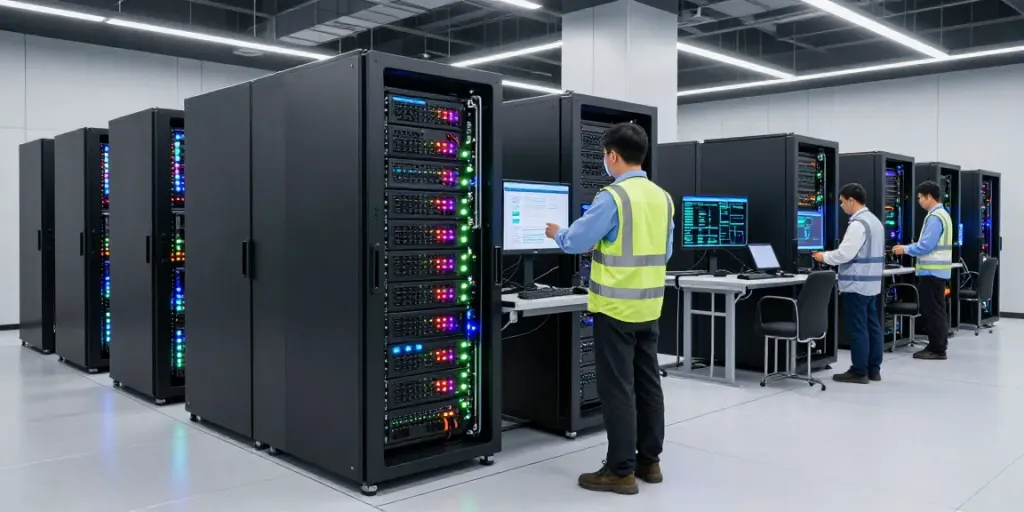
An AI data center is a specialized facility designed specifically to support the intensive computational requirements of AI applications. Unlike traditional data centers, which may prioritize general computing tasks, AI data centers are optimized for high-performance computing capabilities. This includes the deployment of high-density GPU (Graphics Processing Unit) clusters that can efficiently handle complex calculations required for machine learning and deep learning processes.
Key Components of Modern AI Data Centers
Modern AI data centers incorporate several key components that differentiate them from their traditional counterparts:
- High-Performance Computing (HPC) Hardware: AI data centers utilize powerful GPUs and TPUs (Tensor Processing Units) that accelerate AI training and inference processes.
- Scalable Storage Solutions: The ability to store and manage large datasets is crucial, so these data centers employ scalable storage options, such as cloud-based solutions or high-capacity block storage.
- Network Infrastructure: A robust and low-latency network is essential for facilitating rapid data transfer between computational units and for ensuring seamless access to AI applications.
- Advanced Cooling Systems: Given the heat generated by densely packed hardware, effective cooling systems are implemented to maintain optimal operating temperatures and prevent hardware failures.
Why AI Data Centers Are Essential for the Future
The demand for AI-driven services is growing exponentially, driven by industries such as healthcare, finance, and retail. AI data centers address this demand by providing a reliable infrastructure that supports the development and deployment of AI applications. As organizations seek to leverage AI for enhanced decision-making and operational efficiency, the role of these data centers will only become more critical.
The Role of AI Data Centers in the Token Economy
AI data centers are not just computing facilities; they are pivotal in the burgeoning AI token economy. By connecting computational power with tokenized services, these data centers facilitate various innovative business models and revenue streams.
How AI Data Centers Support Tokenized Services
Tokenization in AI refers to the practice of converting services and computational resources into tradable digital assets, typically underpinned by blockchain technology. AI data centers support these services by providing the necessary infrastructure to process input tokens generated from AI models and returning output tokens as a measure of the computational work performed. This model creates a transparent environment where participants can engage in the AI token economy.
Power Consumption and Sustainability in AI Data Centers
While the power consumption of AI data centers tends to be substantial, the focus on sustainability is increasingly significant. Companies are recognizing that adopting energy-efficient technologies and utilizing renewable energy sources can mitigate their environmental impact. Strategies such as optimizing cooling systems and improving server utilization rates are essential for reducing the carbon footprint of AI operations.
Impact of AI Data Centers on Global AI Infrastructure
The establishment of AI data centers has a profound impact on global AI infrastructure. These facilities enable organizations to leverage advanced AI capabilities without the need for significant upfront investments in hardware. By outsourcing processing needs to dedicated AI data centers, companies can remain agile and focus resources on innovation and application development.
Evaluating AI Data Center Options
Choosing the right AI data center solution requires careful consideration of several factors, including infrastructure type, scalability, and cost. Organizations must thoroughly evaluate their options to ensure that they select a provider that aligns with their specific needs and growth trajectory.
Cloud-Based vs. On-Premises AI Data Centers
One of the primary decisions organizations face is whether to implement a cloud-based or an on-premises AI data center. Cloud-based solutions offer scalability, flexibility, and reduced maintenance costs, while on-premises options provide more control over hardware and security. Understanding these trade-offs is essential for companies looking to optimize their AI infrastructure.
Scalability and Flexibility in AI Data Center Solutions
Scalability is critical in AI data centers, given the fluctuating demands of AI workloads. Organizations need infrastructure that can easily scale up or down based on computational needs. Flexibility in deployment models can also facilitate the integration of AI solutions into existing workflows without significant disruptions.
Cost Implications of Different AI Data Center Models
The cost of operating an AI data center can vary widely depending on the chosen model. Factors such as hardware acquisition, maintenance, energy consumption, and staffing all contribute to the total cost of ownership. Understanding these implications ensures that organizations make informed decisions when selecting an AI data center provider.
Future Trends in AI Data Centers
The landscape of AI data centers is evolving rapidly. Emerging technologies and trends will shape the capabilities and operational models of these facilities in the years to come, especially as AI applications continue to expand.
Emerging Technologies Shaping AI Data Centers
Technologies such as edge computing, quantum computing, and advanced networking paradigms are beginning to influence the design and operation of AI data centers. Edge computing enhances data processing proximity to the user, reducing latency and improving response times. Meanwhile, quantum computing promises to revolutionize how data is processed and analyzed, leading to unprecedented advancements in AI capabilities.
Predictions for AI Data Center Growth in 2026
Looking ahead to 2026, the growth of AI data centers is expected to be steep. A combination of increased computational demand, advancements in AI technologies, and a focus on sustainability will drive the expansion of both cloud-based and on-premises facilities. As industries continue to explore AI-driven innovations, the infrastructure supporting these applications will need to evolve accordingly.
Innovations in Energy Efficiency for AI Data Centers
Energy efficiency is becoming a centerpiece of discussions surrounding AI data centers. Innovations in cooling technologies, renewable energy integration, and improved power management techniques are expected to significantly contribute to reducing the operational costs associated with AI workloads.
Frequently Asked Questions
What are the main differences between AI data centers and traditional data centers?
AI data centers are specifically designed to handle the unique needs of AI applications, utilizing advanced hardware and infrastructure tailored for high-performance computing. Traditional data centers, on the other hand, may not be optimized for these demanding tasks.
How can businesses choose the right AI data center provider?
When selecting an AI data center provider, businesses should consider factors such as scalability, power efficiency, provider reputation, and the ability to integrate with existing systems. A careful evaluation of these elements will ensure that the chosen solution meets both current and future needs.
What environmental impacts should be considered with AI data centers?
The environmental impacts of AI data centers include significant energy consumption and the associated carbon footprint. Companies should adopt sustainable practices, such as using renewable energy sources and optimizing resource usage, to minimize their ecological impact.
What advancements are expected in AI data center technology?
Future advancements in AI data center technology will likely include enhanced hardware capabilities, more efficient cooling systems, and smarter resource management solutions that improve overall operational efficiency.
How do AI data centers contribute to the AI Token Economy?
AI data centers facilitate the token economy by providing the computational resources required to execute and process AI tasks efficiently. This contributes to a system where services can be tokenized, creating new revenue models and opportunities for businesses involved in AI applications.